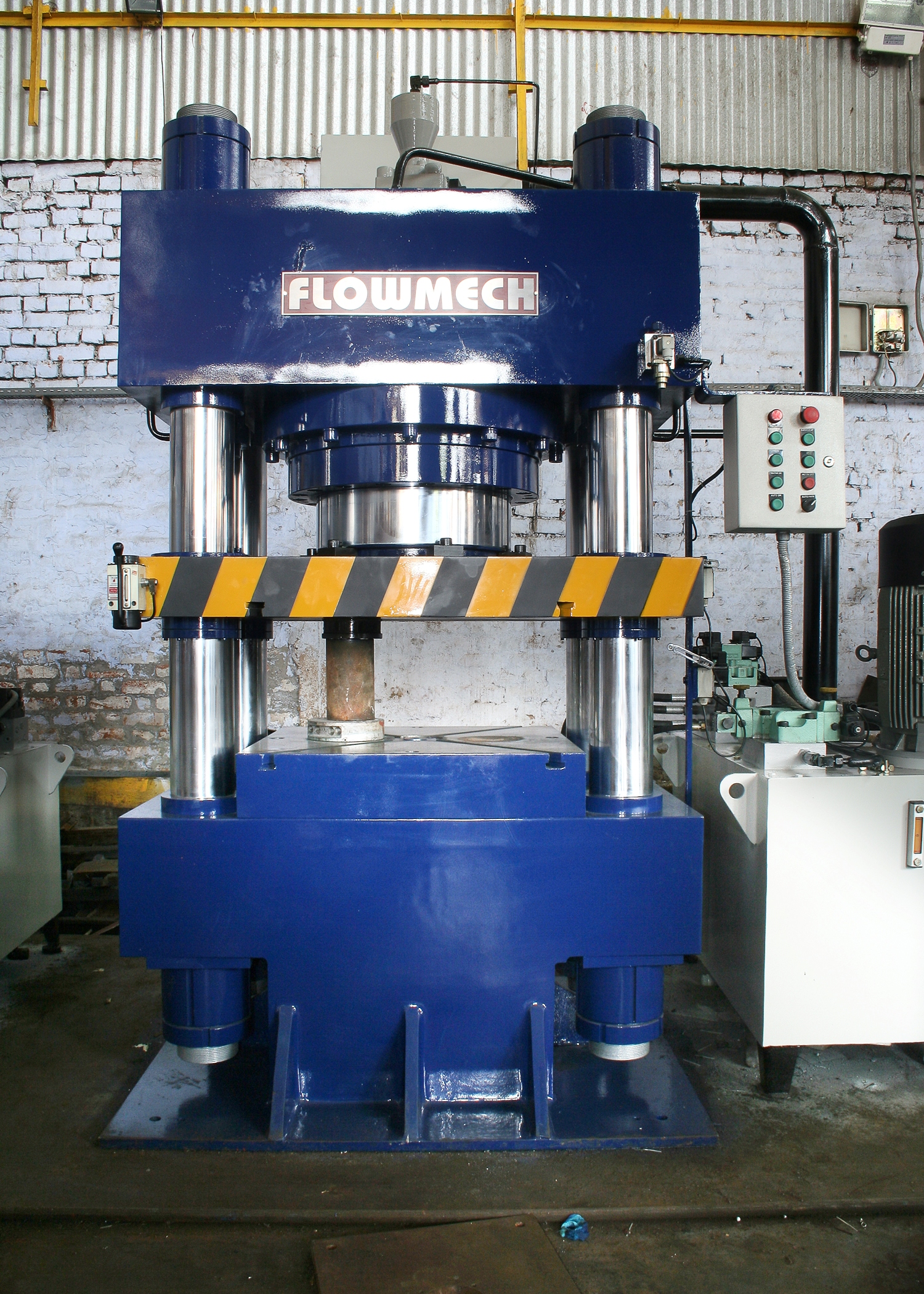
Rubber moulding and compression moulding are widely used manufacturing processes for producing durable, flexible, and customized rubber components. These processes require the application of high pressure and controlled heat, which is effectively provided by a hydraulic press. The hydraulic press ensures consistency, precision, and strength in moulded rubber products, making it an indispensable machine in modern rubber processing industries.
Role of Hydraulic Press in Rubber Moulding
- Uniform Pressure Application
- Rubber moulding requires even distribution of pressure to fill every corner of the mould.
- Hydraulic presses deliver consistent pressure, ensuring accurate shaping and dimensional stability of rubber parts.
- Rubber moulding requires even distribution of pressure to fill every corner of the mould.
- Heat and Pressure Combination
- Many rubber products need vulcanization (curing) at high temperature.
- Hydraulic presses maintain both pressure and temperature uniformly, improving product quality.
- Many rubber products need vulcanization (curing) at high temperature.
- Versatility
- Used for a wide variety of rubber products like seals, gaskets, automotive components, footwear soles, and industrial parts.
- Used for a wide variety of rubber products like seals, gaskets, automotive components, footwear soles, and industrial parts.
- Precision and Repeatability
- Ensures identical results across multiple production cycles.
- Reduces rejection rates and enhances productivity.
- Ensures identical results across multiple production cycles.
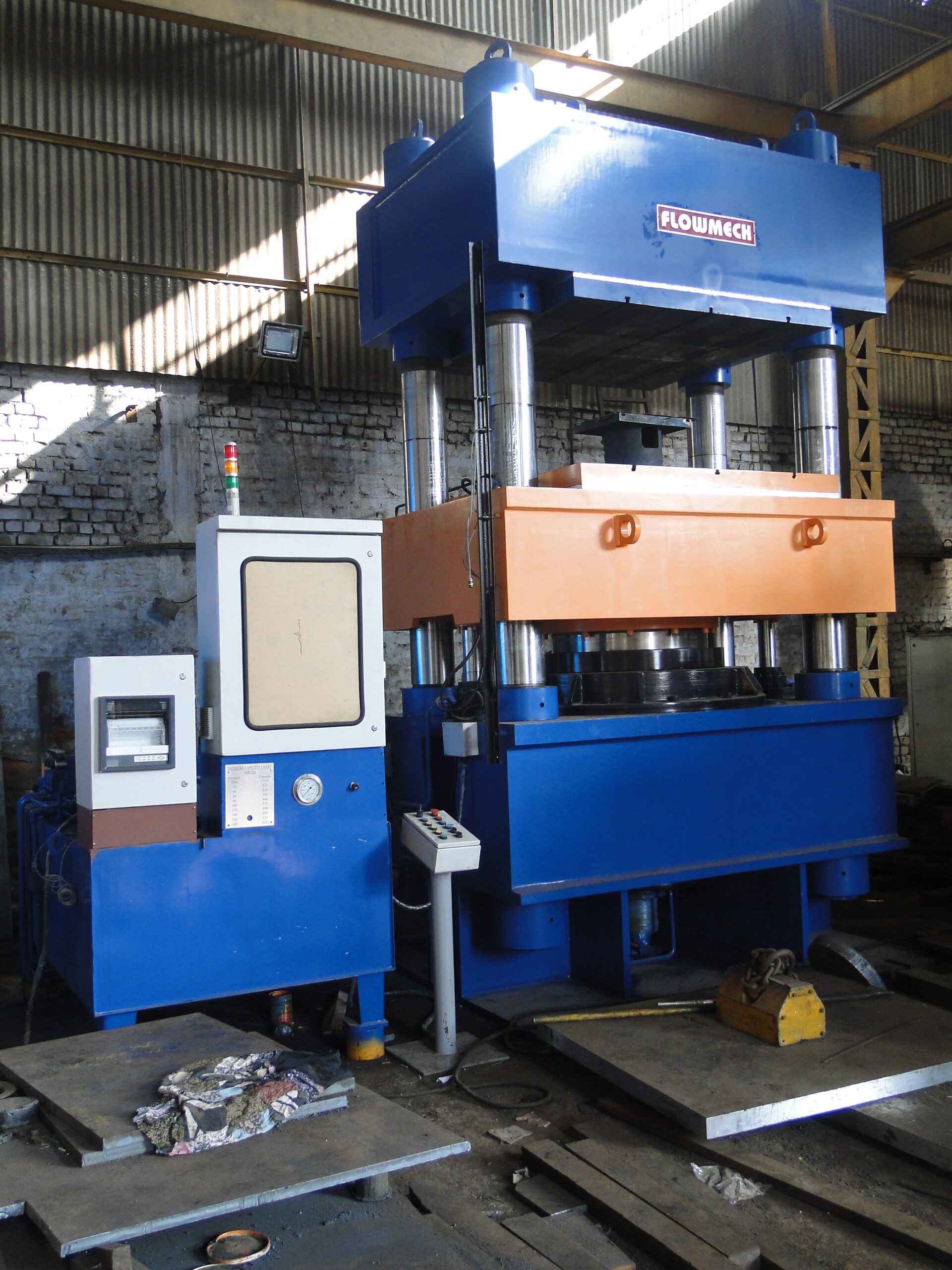
Role of Hydraulic Press in Compression Moulding
- Compression of Raw Material
- In compression moulding, raw rubber is placed into a heated mould cavity.
- The hydraulic press applies pressure, forcing the rubber to spread evenly and take the mould’s shape.
- In compression moulding, raw rubber is placed into a heated mould cavity.
- Curing Process
- The applied heat and pressure initiate chemical reactions, curing the rubber for durability and elasticity.
- Hydraulic presses provide programmable cycles for pressure and temperature, enabling consistent curing.
- The applied heat and pressure initiate chemical reactions, curing the rubber for durability and elasticity.
- High Strength Components
- Hydraulic presses ensure compactness and strength of moulded products.
- Ideal for large or thick rubber components where uniform density is crucial.
- Hydraulic presses ensure compactness and strength of moulded products.
- Cost Efficiency
- Compression moulding with hydraulic presses is economical for medium to large-scale production.
- Minimal material wastage compared to other moulding techniques.
- Compression moulding with hydraulic presses is economical for medium to large-scale production.